
Understanding the Warning Signs of Stroke: The Pathogenesis, Recognition, and Clinical Diagnosis of Transient Ischemic Attack (TIA)
Cerebrovascular disease and "stroke". The term "stroke" refers to an acute cerebrovascular event, medically termed "cerebral infarction" or "stroke." The term "mini-stroke" is related to transient ischemic attack (TIA), lacunar infarction, and minor cerebral infarction. The most common type of stroke is ischemic cerebrovascular disease, accounting for approximately 70%, including TIA and cerebral infarction; the remaining 30% are hemorrhagic cerebrovascular diseases, including 25% cerebral hemorrhage and 5% subarachnoid hemorrhage. At the end of 2008, the Ministry of Health of my country published a study on the causes of death in China, ranking cerebrovascular disease as the leading cause, causing approximately 2 million deaths annually. More than 1 million people are disabled due to stroke. This chapter introduces the basic principles of diagnosis and treatment for the most common types of cerebrovascular diseases in the Chinese guidelines for the prevention and treatment of cerebrovascular diseases, as well as key points for comprehensive daily prevention and treatment.
Transient ischemic attack (TIA) is a precursor to cerebral infarction. Traditionally defined, TIA is a transient ischemic attack in the carotid or vertebral artery system, causing transient or brief impairment of brain or retinal function. It is reversible and fully recovers within 24 hours, leaving no residual neurological symptoms or signs. Traditional imaging (CT, MRI) and diffusion-weighted imaging (DWI) do not reveal lesions related to the attack. It often occurs repeatedly. TIA is a clinical syndrome caused by multiple factors, including atherosclerosis, arterial stenosis, heart disease, abnormal blood components, and hemodynamic changes. The main mechanisms of TIA include: ● Microemboli theory; ● In cases of severe stenosis of intracranial arteries, fluctuations in blood pressure can cause transient ischemic attacks in brain regions that are normally maintained by collateral circulation; ● Changes in blood components, such as increased blood viscosity and increased fibrinogen levels, are also related to the pathogenesis of TIA; ● Vertebral-subclavian steal syndrome caused by stenosis or occlusion of the brachiocephalic or subclavian arteries can also trigger TIA.
Some so-called "mini-strokes" are transient ischemic attacks (TIAs), which Traditional Chinese Medicine (TCM) assesses as having a severe impact: "A major stroke is inevitable within three years." The probability of stroke is significantly increased in TIA patients. Stroke rates are 4%–8% within one month of a TIA, 12%–13% within one year, and 24%–29% within five years. The prognosis varies depending on the underlying cause of TIA. TIA presenting with hemispheric symptoms and those accompanied by carotid artery stenosis have a poor prognosis in 70% of cases, with a 40% chance of stroke within two years. TIA involving the vertebrobasilar artery system has a lower incidence of stroke. Comparatively, patients with isolated monocular visual symptoms have a better prognosis; younger TIA patients have a lower risk of stroke. When evaluating TIA patients, the underlying cause should be determined as soon as possible to assess prognosis and decide on treatment.
Clinical characteristics. (1) Rapid onset, from no symptoms to peak in no more than 5 minutes. If it shows continuous progression, the possibility of cerebral infarction should be considered. (2) Symptoms of focal brain or retinal dysfunction. (3) Short duration, generally 10-15 minutes, mostly within 1 hour, and no longer than 24 hours. (4) Complete recovery without residual neurological deficits. Traditional imaging (CT, MRI) and diffusion-weighted imaging (DWI) examinations did not find any lesions related to this attack. (5) Often has a history of multiple recurrent attacks.
The distribution of affected blood vessels and the symptoms of TIA. (1) TIA of the internal carotid artery system often presents as symptoms in one cerebral hemisphere or one eye. Visual symptoms (ipsilateral) include transient monocular amaurosis, fogging, black spots in the visual field, or shadows in front of the eyes, or darkening. Symptoms of the cerebral hemisphere are often weakness or numbness in one side of the face or limbs, and may include one or more combinations of symptoms such as homonymous hemianopsia, aphasia, and changes in cognitive and behavioral functions. (2) TIA of the vertebrobasilar artery system (posterior circulation system) usually presents as vertigo, dizziness, dysarthria, falls, ataxia, abnormal eye movements, diplopia, crossed motor or sensory disturbances, hemianopsia, or bilateral visual loss. Note: Clinically isolated vertigo, dizziness, or nausea are rarely caused by TIA. Patients with vertebrobasilar artery ischemia may experience transient vertigo attacks, but these must be accompanied by other neurological symptoms or signs.
Ancillary examinations. The purpose of ancillary examinations is to identify or rule out the cause of TIA that may require special treatment, to look for risk factors that can be improved, and to predict the prognosis. (1) Head CT and MRI. No lesions related to this attack were found on CT, MRI imaging, or MR diffusion-weighted imaging (DWI). (2) Ultrasound examination. ● Carotid and vertebral artery ultrasound examination: should be a basic examination for TIA patients, paying attention to atherosclerotic plaques and stenosis; ● Transcranial color Doppler ultrasound (TCD): is a powerful tool for detecting stenosis of intracranial large vessels; ● Transesophageal echocardiography (TEE): helps to find the source of various cardiac emboli. (3) Cerebral angiography. ● Selective ductus arteriosus (DIA) cerebral angiography (digital subtraction angiography, DSA): This is the most accurate diagnostic method (gold standard) for assessing intracranial and extracranial arterial vascular lesions. It is expensive and carries a certain risk of complications (0.5%–1%). ● Computed Tomography Angiography (CTA) and Magnetic Resonance Angiography (MRA): These are non-invasive vascular imaging techniques, but they do not provide as detailed vascular information as DSA and can lead to overestimation of the degree of arterial stenosis. 4. Other examinations. Abnormalities in routine tests such as hemoglobin, hematocrit, platelet count, prothrombin time, or partial thromboplastin time require further examination of other coagulation parameters. Clinically, there is no routine, standardized assessment sequence or fixed auxiliary diagnostic tests for TIA; they often vary from person to person.
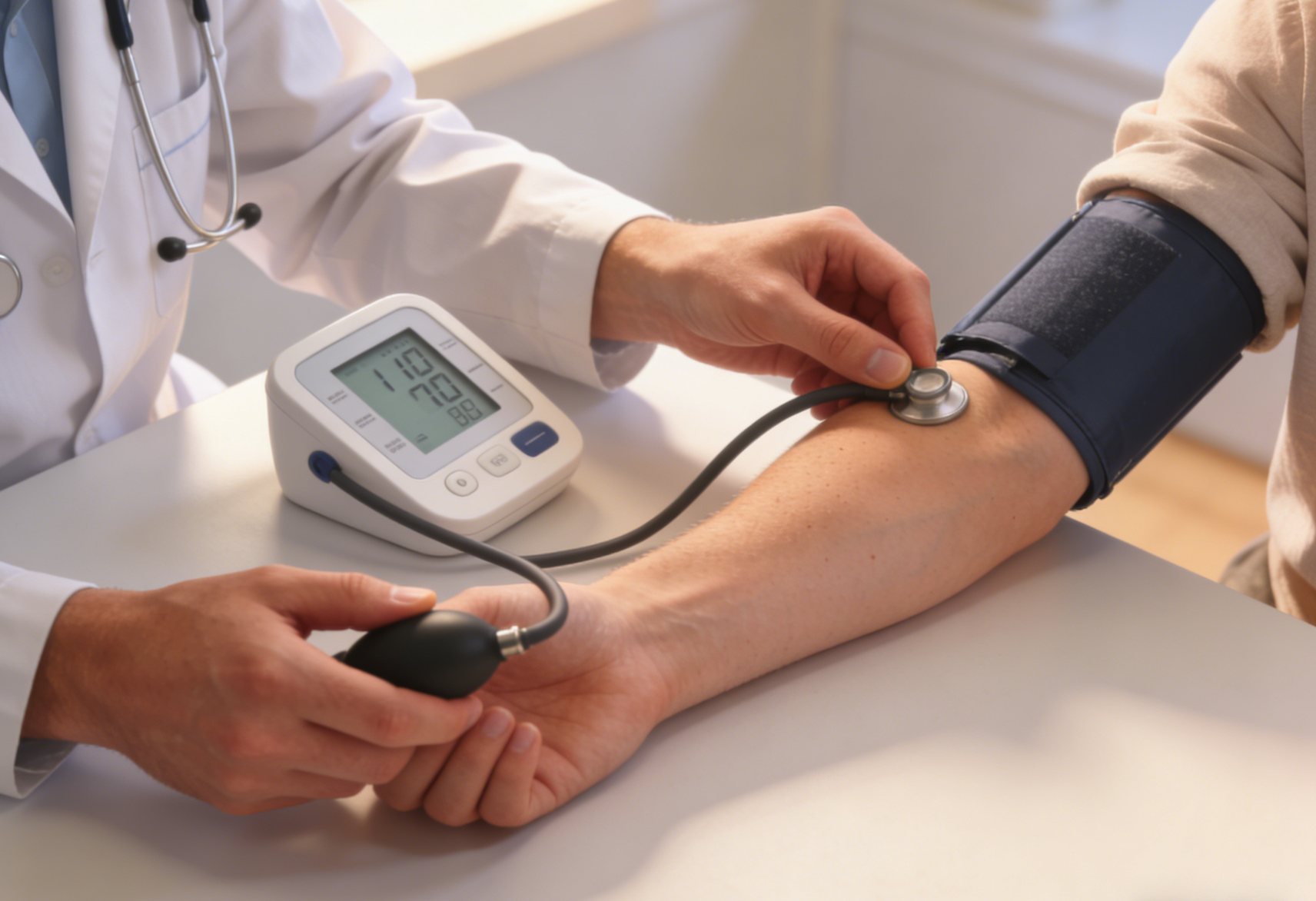
Blood Pressure Health Education: Hypertension Classification, Standards, and Key Points of Scientific Management
This article explains the definition of blood pressure, the normal range of systolic and diastolic blood pressure, introduces the dangers and control goals of hypertension, and explains that proper blood pressure management can reduce the risk of complications and help stabilize blood pressure levels.
2026-01-27
Detailed Explanation of Blood Pressure Knowledge: Identification and Management of Borderline and False Hypertension
This article defines numerical standards for hypertension and borderline hypertension, analyzes the causes and diagnostic methods of pseudohypertension, and scientifically identifies blood pressure types to avoid the risk of misdiagnosis and facilitate reasonable blood pressure management.
2026-01-28
A Comprehensive Guide: The Differences, Causes, and Prevention of Primary and Secondary Hypertension
This article provides a comprehensive analysis of the core differences between primary and secondary hypertension, elucidating the key causes and major harms of elevated blood pressure. It covers the diagnosis, treatment, and complication prevention of both types of hypertension, with a particular emphasis on blood pressure control to reduce risks to the heart, brain, and kidneys. This is an authoritative interpretation of hypertension knowledge.
2026-01-29