
Weight Loss and Vascular Protection: A Tutorial on Blood Pressure and Blood Sugar Lowering Exercises for Hypertension, Hyperlipidemia, and Hyperglycemia
Which exercises are suitable for you?
(1) Do health exercises regularly for better health.
Blood sugar lowering exercises
Many diabetic patients have distal vascular necrosis, so in the later stages of diabetes, many patients experience symptoms such as finger headaches, redness, swelling, and numbness in the toes. You can do this every day: Raise your body upwards, support yourself on your feet, lift your heels off the ground, and rise and fall on your toes while simultaneously opening your arms and hands wide to make a "grabbing" motion. Each time you grab, your feet will move accordingly. Do this for 5 minutes each time, every morning and evening. However, when doing these exercises, be sure to maintain your balance to avoid falls and injuries.
Blood pressure lowering exercises
This exercise is based on the traditional Chinese medicine theory of "calming the liver and extinguishing wind." It has 10 sections, is very easy to perform, and has no side effects. Each session takes about 10 minutes. The main movements include:
Section 1: Preparatory movements. The first exercise can be performed sitting or standing, maintaining a natural and upright posture. Look straight ahead, shoulders relaxed and elbows slightly drooping, chest slightly concave and back straight. Regulate your breathing and focus your mind on the Yongquan acupoints on the soles of your feet. Relax all muscles. Inhale through the nose and exhale through the mouth during the exercise. Choose the standing or sitting posture according to your individual physical condition.
Second Section: Pressing and Rubbing the Taiyang Point. Effects: Relieves wind-heat, clears the mind, brightens the eyes, and relieves headaches. Procedure: Place the pads of your index fingers on the depression one inch behind the midpoint between the eyebrow and the outer corner of the eye, pressing the Taiyang point. Rotate clockwise for one full beat (four sets of eight beats).
Third Section: Massaging the Baihui Point. Effects: Calms the mind, clears the mind, and lowers blood pressure. Procedure: Place the palm of your left or right hand on the Baihui point (located at the top of the head, in the center of the line connecting the tips of both ears) and rotate. One full beat is one set (four sets of eight beats).
Fourth Section: Pressing and Rubbing the Fengchi Point. Effects: Calms the mind, clears the mind, and relieves irritability. Operation: Use the pads of both thumbs to sweep and knead the Fengchi acupoints (located in the depression between the upper outer edge of the trapezius muscle and the upper posterior edge of the sternocleidomastoid muscle below the occipital bone in the neck), rotating clockwise once for one beat (four sets of eight beats).
Section 5: Head Massage for Brain Clearing. Effects: Relieves muscle tension, clears the meridians, calms the liver, lowers blood pressure, and clears the mind. Operation: With fingers naturally spread, use the hypothenar eminence of both hands to massage from the forehead to behind the ears, moving in an arc from front to back once for one beat (four sets of eight beats). (This section involves massaging acupoints such as Meichong, Toulinqi, Touwei, Zanzhu, Yuyao, Yangbai, Sibai, Yifeng, and the ear acupoint for lowering blood pressure).
Section 6: Neck Rubbing for Blood Pressure Lowering. Effects: Relieves sternocleidomastoid muscle spasm and lowers blood pressure. Operation: First, use the thenar eminence of the left hand to rub the sternocleidomastoid muscle on the right side of the neck, then switch to the right hand to rub the left side of the neck. One repetition is one beat (four sets of eight beats).
Section 7: Kneading for Blood Pressure Lowering. Efficacy: Clears heat and lowers blood pressure. Procedure: First use the right hand, then the left, to massage the elbow joint and the Quchi acupoint (located in the depression at the elbow tip). One rotation is one beat (four sets of eight beats).
Section 8: Massage the Neiguan acupoint to widen the chest. Efficacy: Soothes the mind and widens the chest. Procedure: First use the right thumb to massage the Neiguan acupoint on the left hand (two finger-widths above the wrist crease, between the two tendons), then switch hands and massage the Neiguan acupoint on the right hand. One clockwise rotation is one beat (four sets of eight beats).
Section 9: Guide blood downwards. Efficacy: Treats the root cause, strengthens the spleen and stomach, and guides blood downwards. Procedure: Simultaneously massage the Zusanli acupoint on both lower legs with the left and right thumbs (located in the depression four finger-widths below the outer knee eye). One rotation is one beat (four sets of eight beats).
Section 10: Expand the chest and regulate Qi. Efficacy: Soothes the mind, widens the chest, and promotes Qi circulation. Instructions: Relax both hands and let them hang down, then clench them into loose fists, bend your elbows and raise them, lifting your shoulders and expanding your chest backward, finally relaxing back to the starting position. If performing this standing chest expansion, you can simultaneously bend your left knee and raise it, jumping back to the starting position. Repeat this process, then switch to your right leg, bending your knee and raising it, finally relaxing back to the starting position (four sets of eight counts).
When performing this exercise, please note the following: ① Follow the acupoint diagram carefully, locating the relevant acupoints accurately and using appropriate techniques; ② If there are wounds or sores on the skin at the acupoints, they should be healed before performing the exercise; ③ Do not perform the exercise when excessively hungry or full.
Miraculous Blood Pressure Lowering "Foot Exercise": The ankle is not only a support point for the body's weight but also a crucial point for blood flow in the feet. If the ankles become stiff and aged, it can induce high blood pressure, causing lower limb arterial vascular obstruction, and even hemiplegia. Therefore, middle-aged and elderly people, especially those with high blood pressure, can benefit from consistently performing "ankle exercises" at home to prevent lower limb vascular diseases caused by high blood pressure. Ankle exercises can be divided into four sections:
Section 1, Ankle Extension: Kneel with the backs of your feet facing down, and slowly lean your upper body backward to stretch the muscles at the front of your ankle and the tissues around the ankle bone (you may feel a slight soreness in your ankle). Hold this position for about 1 minute.
Section 2, Toe Raises: Stand straight with your arms hanging down. Then, raise your right toes, pushing your body upward as you do so. Repeat this raising and lowering motion, alternating between your right and left feet, 10 times for each foot. Its main purpose is to strengthen ankle muscles.
Section 3, Foot Exercises: Sit on a chair or the edge of a bed with one foot on the ground. Slowly raise and straighten the other leg, coordinating the movement with your breathing. Exhale while pressing your toes down as far as possible, and inhale while pointing your toes upward as far as possible. Maintain steady breathing, avoiding rapid breathing, and focus on both breathing and leg movement to relax and stretch the calf muscles and ankle blood vessels. Perform 10 repetitions for each foot. Section Four, Rotation Exercise: Sit on a stool with your legs crossed. Slowly lift your left leg and place it on your right thigh. Grasp the ball of your left foot with your right hand and the top of your left ankle with your left hand, preventing it from moving. Then, slowly rotate your foot from right to left and from left to right 10 times. Repeat with your right foot.
When practicing this ankle exercise at home, be sure to proceed gradually and within your limits. Do not rush, and avoid falls or injuries.

Guidelines for the identification and prevention of hypertension in adolescence, old age and high altitude
This article analyzes the characteristics of hypertension in three special populations: adolescents, the elderly, and those living in high-altitude areas. For different causes, such as hypertension due to puberty, arteriosclerosis, and high-altitude hypoxia, it provides corresponding monitoring focuses and prevention strategies to help readers scientifically manage abnormal blood pressure.
2026-02-07
Malignant Hypertension with Encephalopathy: Symptoms, Diagnosis and Emergency Care Guidelines
This article provides a detailed analysis of the symptoms of malignant hypertension and hypertensive encephalopathy, such as a sudden increase in blood pressure, headache, and vomiting, as well as their pathogenesis and diagnostic methods. It focuses on emergency treatment measures, emphasizing timely blood pressure control to prevent cerebral edema and organ damage, and provides guidance for patient care.
2026-02-26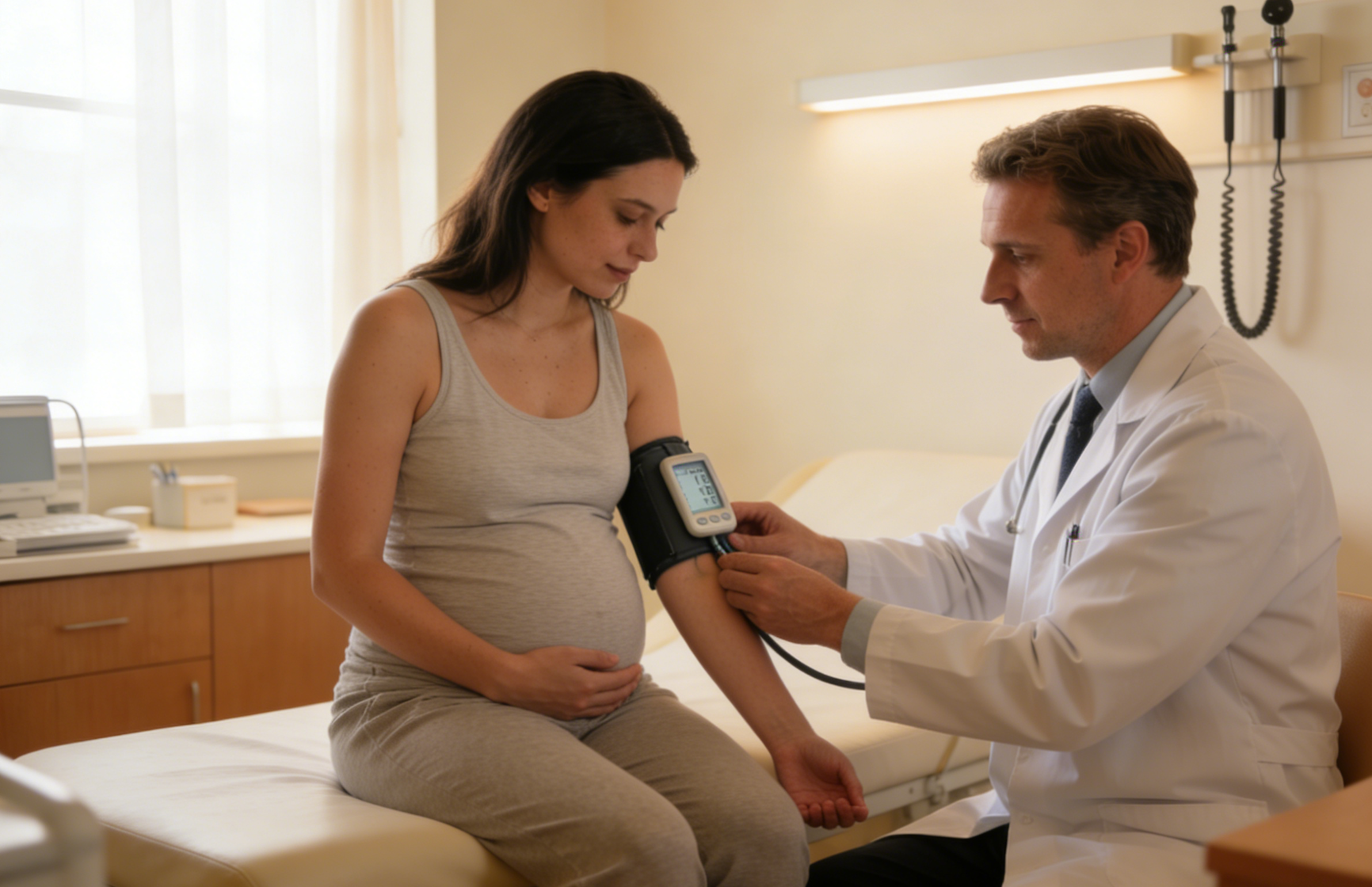
Pregnancy-induced hypertension and its effects on the heart and prevention and treatment measures
This article explores the diagnostic criteria for gestational hypertension and its long-term effects on the heart, including left ventricular hypertrophy and coronary artery disease. Understanding these complications caused by elevated blood pressure helps in taking early preventive and treatment measures to protect maternal and infant health and cardiac function.
2026-02-27