
Coronary artery bypass grafting (CABG) practice and cardiac health care for middle-aged and elderly people: surgical principles, indications, and daily life prescriptions
Section 4 Coronary Artery Bypass Grafting I. Coronary Artery Bypass Grafting Coronary artery stenosis in coronary heart disease is often segmental, mainly located in the proximal and mid-segments of the coronary arteries, while the distal segments are mostly normal. Coronary artery bypass grafting (CABG) creates a pathway between the proximal and distal ends of the stenotic coronary artery, allowing blood to bypass the narrowed area and reach the distal end, much like a bridge allowing a highway to cross mountains and rivers unimpeded. However, the materials used are not reinforced concrete, but rather the patient's own great saphenous vein, internal mammary artery, right gastroepiploic artery, radial artery, inferior epigastric artery, etc. When using the great saphenous vein for bypass, the great saphenous vein is harvested from the upper leg or thigh, with one end anastomosed to the distal end of the stenotic coronary artery and the other end anastomosed to the ascending aorta. Alternatively, several side holes can be made in a single vein to anastomose with several coronary arteries side-to-side; this is known as sequential bypass or serpentine bypass. Using the great saphenous vein for bypass surgery is less invasive and simpler, but the long-term results are worse than arterial bypass, making it suitable for older patients. Arterial bypass surgery is more invasive, technically demanding, and more difficult, but the long-term results are better than with the great saphenous vein, making it suitable for younger patients. Generally, patients over 80 years old can use the great saphenous vein alone, those over 55 years old can consider using arterial bypass, and other age groups can use a single internal mammary artery and the great saphenous vein. The surgery is usually performed under general anesthesia, hypothermia, cardiopulmonary bypass, and with the heart stopped. It generally takes 2-3 hours. In simple cases, coronary artery bypass surgery can be performed without cardiopulmonary bypass, with the heart still beating.
II. Coronary Artery Bypass Grafting (CABG) for Relieving Angina Symptoms: A 30-year history of CABG has proven its effectiveness in relieving angina symptoms; the phrase "immediate results" best describes the postoperative effects. Many patients can climb stairs a few days after undergoing CABG. If recovery is good, they can go out on the street after a week. Some patients describe the disappearance of chest tightness and pain after surgery as feeling like a window suddenly opening in a stuffy winter room, making even the air feel exceptionally fresh. Patients can generally perform light work 1-2 months after surgery, and can basically return to their original work after 3-4 months. One 68-year-old retired cadre required intravenous nitroglycerin injections before surgery and still experienced chest pain when turning over. After the surgery, which involved grafting five arteries, he was able to walk around and live independently within a week. However, not all patients recover so smoothly. A crucial factor affecting postoperative recovery is the preoperative cardiac function. Patients with coronary heart disease should seek medical attention as soon as they experience angina symptoms to avoid complications in postoperative recovery due to extensive myocardial infarction and excessive myocardial cell necrosis. How long can a heart bypass graft last? This is a concern for many patients. It is generally believed that the patency rate after ten years is about 60% to 70% when using venous bypass grafts. The long-term patency rate is even better when using arterial grafts. However, because the human body has limited arterial material, and some arterial materials are prone to spasm, have too narrow a lumen, or even have underlying diseases or stenosis, arterial grafts are not suitable for all patients.
III. Which patients need coronary artery bypass grafting (CABG)? Generally, when coronary artery stenosis is less than 50%, it has little impact on blood flow. However, when stenosis reaches 75%, it significantly affects blood flow and causes angina symptoms. Therefore, anyone with 75% stenosis in a single coronary artery or more than 50% stenosis in two or more coronary arteries needs CABG. Many patients who have undergone coronary angioplasty and had stents implanted in their coronary arteries (commonly known as PTCA) also need timely CABG if they experience angina again. This not only eliminates angina, allowing patients to live and work normally, but also prevents myocardial infarction and sudden death. Ventricular aneurysms formed after myocardial infarction can severely affect cardiac function, causing serious arrhythmias or thromboembolism, and must be surgically removed. Performing CABG simultaneously with ventricular aneurysm removal yields better results.
Section 5: Health Preservation Prescriptions for Middle-Aged and Elderly People. In daily life, if chest tightness or pain occurs, seek timely treatment. If you experience brief chest pain, tightness, or discomfort, and you happen to belong to a "high-risk" group, be highly vigilant and seek medical attention at a cardiology department as soon as possible. In the event of a myocardial infarction, immediate hospitalization is crucial. Timely intervention significantly increases the success rate. Families with "high-risk" individuals should keep some emergency heart medications on hand, such as nitroglycerin, quick-acting heart pills, or isosorbide dinitrate. When symptoms such as chest tightness or pain occur, take one of these medications sublingually and immediately go to the hospital for emergency treatment. This can help relieve vasospasm, dilate blood vessels, and buy more time for the patient to receive treatment.
Health Prescription (1) Eat less oily food, pay attention to a low-salt diet, and eat fresh vegetables such as celery, spinach, tomatoes, radishes, garlic, kelp, seaweed, algae, black fungus, and white fungus. Quit smoking and limit alcohol consumption. For those with high blood lipids and cholesterol, it is best to use vegetable oil for cooking, especially corn oil, sunflower oil, and peanut oil. (2) Exercise in moderation, and exercise should not be too strenuous. Exercise can dilate blood vessels, relieve mental stress, eliminate excessive tension, and reduce weight. Walking, jogging, brisk walking, and Tai Chi are all good exercises. (3) Control your weight. The ratio of waist circumference to hip circumference for men should be less than 0.8, and for women less than 0.7. If it is greater than this ratio, there is a risk of cardiovascular disease. (4) Do not engage in high-intensity, overloaded mental and physical labor for a long time, otherwise it will cause death from overwork. Managers who are engaged in large workloads, high work pressure, high energy consumption, night shifts, and heavy responsibilities should pay more attention to the combination of work and rest. (5) Maintain a good attitude and do not be impatient or excited. (6) People with high blood pressure or high blood sugar should adhere to their medication regimen to maintain stable blood pressure and blood sugar levels. Hypertensive patients should not arbitrarily stop taking their medication to avoid a significant rebound in blood pressure. (7) Regular medical checkups are necessary, and any abnormalities should be treated promptly. Symptoms such as chest tightness or chest pain should be addressed by seeking immediate medical attention.
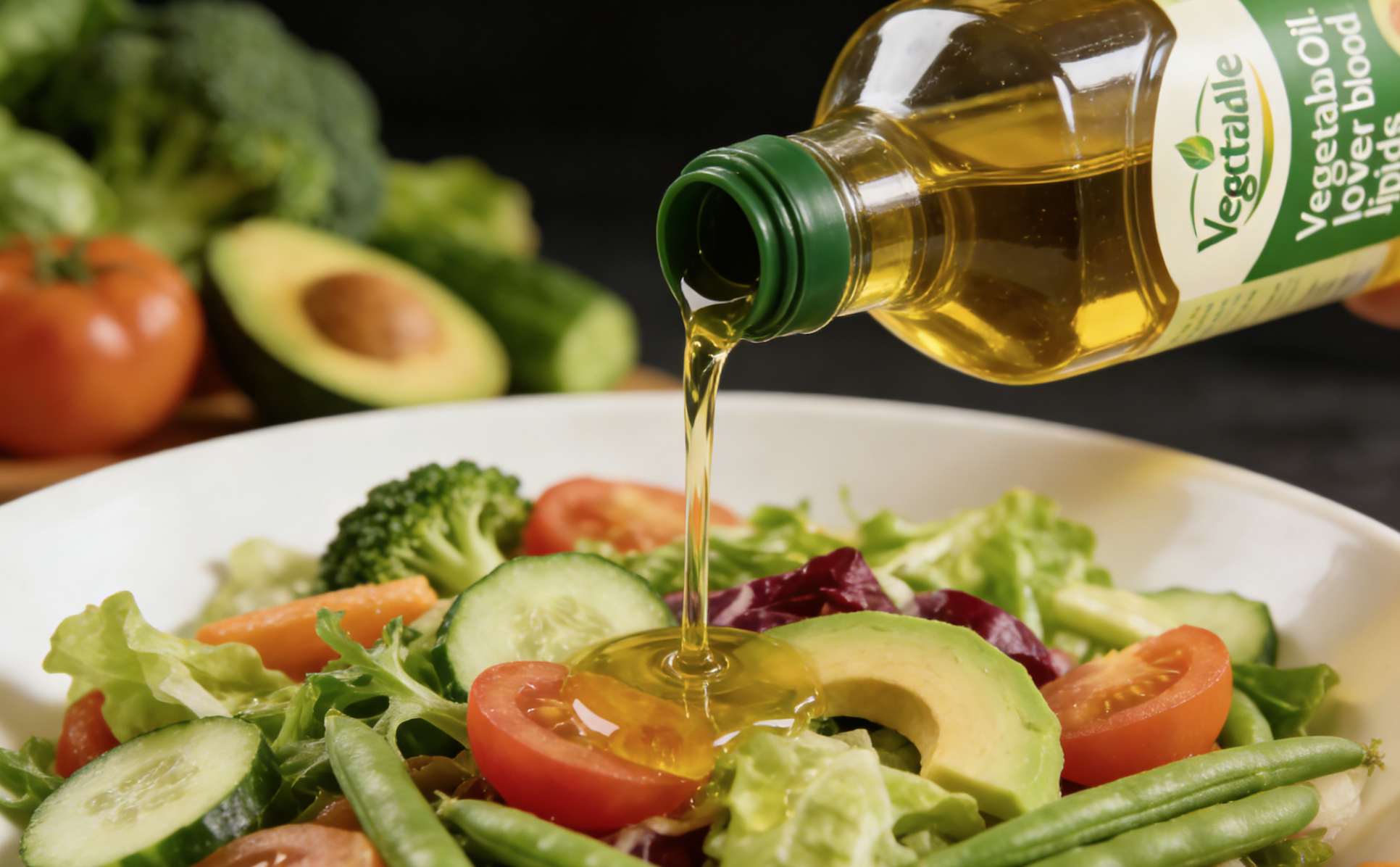
Vegetable oils help lower blood lipids: A guide to scientific selection and consumption.
This article details how common vegetable oils, rich in unsaturated fatty acids, can effectively help patients with hyperlipidemia lower "bad" cholesterol and total cholesterol, thus aiding in the improvement of blood lipid levels. Scientifically selecting and consuming vegetable oils in moderation is an important dietary strategy for regulating blood lipids and preventing atherosclerosis.
2026-01-20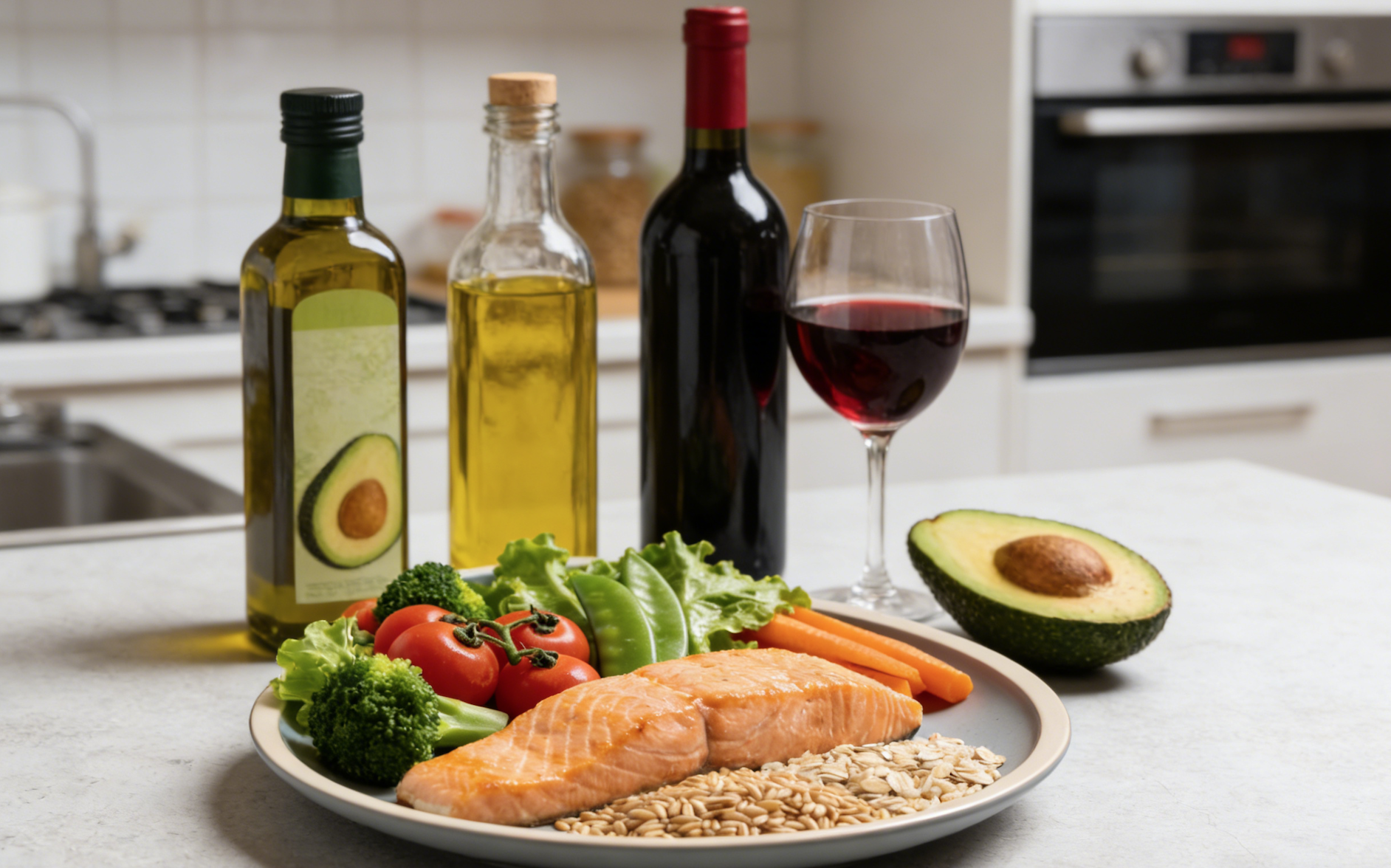
How does moderate consumption of low-alcohol beverages affect blood lipids? A scientific analysis of its advantages and disadvantages.
This article explores the potential benefits of moderate consumption of low-alcohol beverages (such as red wine) on blood lipids, such as increasing levels of "good" cholesterol (high-density lipoprotein) and helping to regulate blood lipids. It also emphasizes the need for strict control of intake (less than 50 grams per day), as excessive consumption can be harmful, providing a scientific dietary reference for managing blood lipids.
2026-01-20
How does plant fiber help lower blood lipids? A breakdown of soluble and insoluble fiber.
This article details how soluble and insoluble plant fibers effectively help lower blood lipids by promoting cholesterol excretion and reducing absorption. Understanding foods rich in plant fiber and consuming them appropriately is an important dietary strategy for scientifically regulating and managing blood lipid levels.
2026-01-20