
Exercise therapy for hypertension: Slow walking to the method of circulating qi
1. Walk slowly
>
[Efficacy]Enhances respiratory function, improves cardiac contractility, increases blood vessel elasticity, promotes blood circulation, and lowers blood pressure.
>
> [Indications] All types of hypertension, especially hypertension patients with poor physical condition and limited mobility.
>
[Method]Walk outdoors in sunny weather with good air quality at a slow or moderate pace of 60-70 steps per minute. Walking for 30-40 minutes daily can achieve good exercise results.
>
> [Precautions]
>
(1) Patients with hypertension should not exercise outdoors by walking in windy or rainy weather.
>
(2) Patients with high blood pressure or other diseases should exercise only after being permitted by a doctor.
>
2. Abdominal breathing therapy
>
[Efficacy]Enhances heart and lung function, promotes blood circulation, dilates blood vessels, and lowers blood pressure.
>
> [Indications] All types of hypertension.
>
[Method]Before starting the practice, loosen or remove tight clothing to allow your whole body to relax naturally. Then lie flat on the bed with your hands hanging naturally at your sides. Elevate your lower legs slightly, close your eyes, clear your mind of distractions, and concentrate your mind on your lower abdomen. Guide your mind to slowly fill your lower abdomen with air and gradually swell it. Then slowly exhale through your nose and gradually sink your lower abdomen as you move your mind away from it. Repeat this method.
>
Each practice session should last 20-30 minutes, 2-3 times daily. Abdominal breathing can be performed lying down; it can also be practiced while sitting quietly or walking slowly.
>
> [Precautions]
>
(1) Drink a cup of warm water before practicing to make the therapeutic effect more ideal.
>
(2) If there is enough time, the practice time can be extended to 1 hour.
>
(3) Practice abdominal breathing while walking, and pay attention to keeping the frequency of breathing coordinated with the pace of your steps.
>
3. Tai Chi
>
> [Efficacy]Promotes the flow of qi and blood, unblocks the meridians, harmonizes yin and yang, and strengthens muscles and bones.
>
> [Indications] All types of hypertension.
>
> [Methods] Tai Chi Chuan includes 24-form Tai Chi Chuan, 48-form Tai Chi Chuan, 88-form Tai Chi Chuan, 32-form Tai Chi Sword, and Tai Chi Push Hands, etc.
>
The key points for practicing Tai Chi Chuan are: ① Eliminate distracting thoughts and selfish desires, clear your mind, and focus your mind on guiding your body movements; ② Sink your Qi to the Dantian (lower abdomen), achieving a state of slight chest inward and back extension (chest slightly concave and back slightly bent), allowing the Qi to flow and nourish the internal organs; ③ Relax your whole body, paying attention to sinking your shoulders and elbows to ensure smooth flow of Qi and blood through the meridians; ④ Coordinate your limbs, ensuring your hands, feet, and waist move in unison, allowing the entire body to flow smoothly and the meridians to connect; ⑤ Use the waist as the axis, always keeping your waist straight and upright, but not stiff, relaxed, with the power concentrated in your legs; ⑥ Move with gentleness and fluidity, requiring soft, continuous, natural, and smooth movements, avoiding stiff and awkward practice, emphasizing intention rather than force; ⑦ Breathe evenly, requiring even, deep, and gentle breathing to ensure smooth and unobstructed blood flow.
>
> [Precautions]
>
> (1) Patients should practice Tai Chi according to their own ability. Those with poor physical condition should not practice at high intensity.
>
(2) Tai Chi Chuan has high requirements for movements. Only by performing the whole set of movements correctly can the ideal effect be achieved.
>
(3) During practice, you should always keep your mind focused and your mood calm.
>
4. Five Animal Frolics
>
[Efficacy]Strengthens muscles and bones, nourishes the kidneys and replenishes essence, promotes qi and blood circulation, and unblocks meridians.
>
> [Indications] All types of hypertension.
>
[Methods]The Five Animal Frolics includes five exercises: Tiger Frolics, Deer Frolics, Bear Frolics, Monkey Frolics, and Bird Frolics. ① Tiger Frolics is based on the image of a tiger, and when practicing, one should focus one's mind on the Mingmen point (located on the lower back). ② Deer Frolics is based on the image of a deer, and when practicing, one should focus one's mind on the coccyx (located at the base of the spine). ③ Bear Frolics is based on the image of a bear, and when practicing, one should focus one's mind on the Zhonggong point (located in the center of the abdomen), maintaining internal movement while remaining external stillness. ④ Monkey Frolics is based on the image of a monkey, and when practicing, one should focus one's mind on the navel (located in the center of the abdomen), maintaining a state of physical movement while maintaining mental stillness. ⑤ Bird Frolics, also known as Crane Frolics, is based on the image of a crane, and when practicing, one should focus one's mind on the Qihai point (located at the center of the abdomen).
>
> [Precautions]
>
> (1) The Five Animal Frolics belongs to the art of guiding and stretching, which emphasizes the coordination of mind, breath regulation and movement.
>
> (2) The basic principles of practicing the Five Animal Frolics are: combining internal and external (emphasizing internal cultivation of essence and qi, and external training of muscles and bones); combining movement and stillness (emphasizing both mental tranquility and sufficient physical movement); combining strength and gentleness (emphasizing the combination of strength with gentleness when practicing strength, and gentleness with strength when practicing gentleness); and unifying intention and qi (emphasizing the importance of regulating the breath when practicing, and strengthening the training of intention when regulating the breath).
>
5. True Qi Circulation Method
>
> [Efficacy]Detoxifies and disperses nodules, unblocks meridians, and balances Qi, blood, Yin and Yang.
>
> [Indications] All types of hypertension.
>
[Method]The True Qi Circulation Method mainly includes 5 steps: ① Focus your breathing on the solar plexus area. Look inward at the solar plexus and listen carefully to your breath. Let your mind follow your breath to the solar plexus area. Practice 3 times a day for 20 minutes each time, and persist for at least 10 days. ② Follow your breath to the dantian. After mastering the first step, extend and sink your breath downwards, gradually advancing to the dantian area. Practice 3 times a day for 25-30 minutes each time, and persist for at least 10 days. ③ Regulate your breath and concentrate on the dantian. Stop your breathing at the dantian, making it natural. Let your mind focus on the dantian area. Practice 3 times a day for at least 30 minutes each time, and persist for at least 40 days. ④ Open the Du meridian without forgetting to return or assist. After the true qi has accumulated to a certain level... The energy will ascend along the Du meridian from the perineum. At this time, you should concentrate and keep your mind and breath in sync. In particular, if you stop at a certain point, you should not force your mind or breath. Increase the number of times you practice each day as appropriate, each time for 40 to 60 minutes. If you persist in practicing for 1 to 2 weeks, the Du meridian will be open. ⑤ Accumulate energy and cultivate vitality. At this time, you should still focus your mind on the Dantian. If you feel movement at the Baihui acupoint on the top of your head after the Du meridian is opened, you can focus your mind on the top of your head. Practice 3 times a day, each time for more than 60 minutes. If you persist in practicing for about 1 month, you will be able to do so.
>
> [Precautions]
>
(1) When practicing, you should keep your attention focused, choose a relatively quiet environment, and avoid being disturbed by others.
>
When adjusting your breathing, pay attention to inhaling and exhaling through your nose, and let your inhalation flow naturally.
>
> (2) It is not advisable to practice when one is hungry, overly full, extremely angry or frightened, or when there is wind, rain or thunder.
>
(3) Focusing the mind on the dantian is a principle that should be adhered to from beginning to end in practicing Qigong. The smooth flow of true Qi along the meridians depends on the strength of the true Qi in the dantian. Even if it cannot flow smoothly, do not force it; let it flow naturally.
>
(4) When the body experiences various sensations during the activity of true qi and the opening of meridians, there is no need to panic or pursue them out of curiosity. It is advisable to continue practicing quietly, focusing on the dantian. After a period of time, these sensations will naturally disappear.
>
6. The Six-Character Mantra for Nourishing Qi
>
> [Efficacy]Activates blood circulation and removes blood stasis, regulates qi and relieves stagnation, detoxifies and dissipates nodules.
>
> [Indications] All types of hypertension.
>
> [Method] The Six Healing Sounds Method for Cultivating Qi mainly consists of six methods:
>
① **Xu (嘘) Exercise:** Exhale through the mouth with lips slightly closed, taut, tongue tip pointing forward and slightly retracted inward, and sides of the tongue curled slightly towards the center, creating a small gap between the teeth. ② **He (呵) Exercise:** Exhale through the mouth with the mouth half-open, tongue tip touching the lower palate, cheeks slightly pulled back, and tongue side against the lower teeth. ③ **Hu (呼) Exercise:** Exhale through the mouth with lips pursed like a tube, lips rounded like a cylinder, tongue flat, slightly curled upward, and forcefully extended forward, drawing the internal air outward. ④ **Yan (咽) Exercise:** Exhale through the mouth with lips slightly retracted, upper and lower teeth facing each other, and tongue tip placed between the teeth. ⑤ **Chui (吹) Exercise:** Exhale through the mouth with the mouth slightly open, corners of the mouth slightly backward, and tongue slightly curled upward and retracted. ⑥ The "Xi" exercise involves keeping your lips slightly open and slightly turned inward, your tongue slightly extended and retracted, and your tongue tip pointing downward as you exhale, accompanied by a self-satisfied and cheerful expression, with a relaxed and contented state of mind.
>
[Precautions]Before practicing, stand in the preparatory posture for a while. Stand with your feet shoulder-width apart, head and neck straight, Baihui acupoint facing upward, internal focus on Dantian, lips slightly closed, tongue touching the upper palate, shoulders relaxed, elbows drooping, arms hanging naturally with elbows slightly bent, armpits slightly open, chest slightly concave and back straight, knees slightly bent, body relaxed, clear your mind of distractions, and breathe naturally and steadily to achieve a state of relaxation, tranquility, and harmonious flow of Qi and blood.
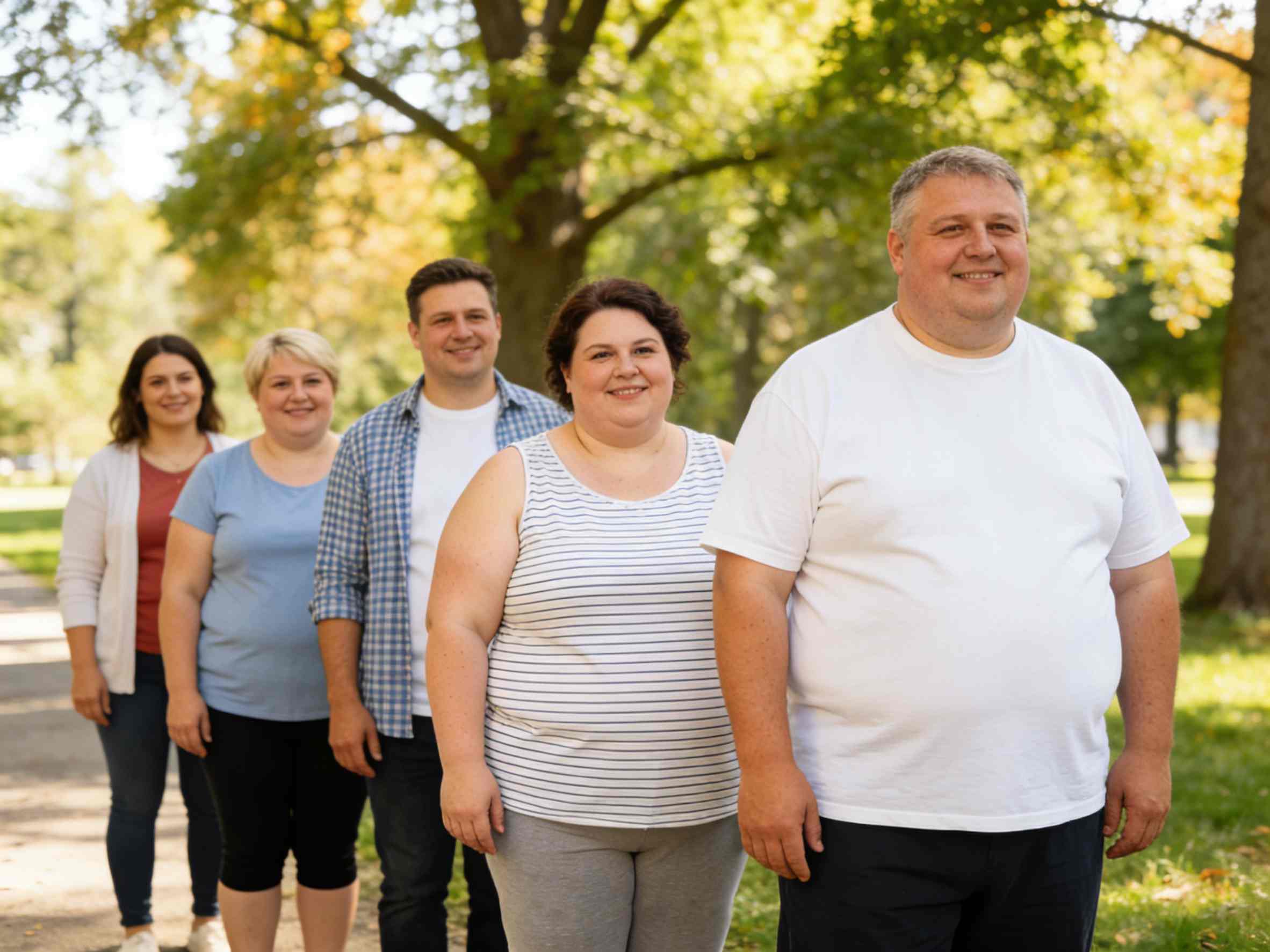
The Hidden Costs of Obesity and the "Fourth High": The Entanglement of Fatty Liver and Hyperuricemia
This article uses the case of "Fangfang's weight loss" to reveal that obesity not only affects physical appearance but also leads to metabolic problems such as fatty liver and high blood lipids. The article further introduces the often-overlooked "fourth high"—hyperuricemia—explaining in detail how purine metabolism disorders can cause gout attacks, and listing the health threats and typical symptoms of hyperuricemia to young and middle-aged men.
2026-03-20
Warning signs of gout: Predisposing factors and lifestyle interventions for hyperuricemia
This article provides an in-depth analysis of the distribution patterns of hyperuricemia in terms of gender, body type, and complications, with a particular focus on the hidden dangers of "asymptomatic hyperuricemia." Through the case of a father and son, both finance executives, suffering from gout, it reveals how long-term fatigue, exposure to cold, excessive alcohol consumption, and a high-purine diet can trigger acute gout attacks. The article summarizes comprehensive lifestyle recommendations for avoiding the "three highs" (high blood pressure, high blood sugar, and high cholesterol) and uric acid problems, emphasizing the importance of prevention.
2026-03-20
Blood pressure: A barometer of life – Exploring the dynamics of blood circulation and the definition of normal values
As the opening chapter on "Fluctuating Blood Pressure," this article elucidates the core significance of blood pressure as a vital sign, explaining the decisive role of blood filling and cardiac ejection within the cardiovascular system in blood pressure formation. The article details the scientific classification criteria for adult blood pressure (from low blood pressure to severe hypertension) and emphasizes the crucial role of regular blood pressure monitoring in identifying healthy, diseased, and sub-healthy states.
2026-03-20