
Improper vitamin supplementation and frequent consumption of sugary drinks: A double health risk warning
Don't take vitamin supplements indiscriminately, it can be harmful:
"Doctor, I'm old, can you give me some calcium injections? Older people are often calcium deficient." "Doctor, I heard that calcium supplements alone aren't absorbed, so I also need to supplement with vitamin D, right?" These are common questions patients ask doctors in clinical practice.
In daily life, many people seem to regularly supplement with various vitamins to maintain health or extend lifespan. But the question is, are vitamin supplements really useful?
A US study involving over 30,000 participants provides an answer: taking supplements does not extend lifespan; in fact, it may be harmful. The study found that participants who obtained sufficient vitamin A, vitamin K, magnesium, zinc, and copper from their diet had lower all-cause mortality and cardiovascular disease mortality rates. However, it also found that daily calcium intake exceeding 1000mg was associated with an increased risk of cancer-related death. Furthermore, the association was stronger if the excessive calcium intake came from supplements. Participants who did not lack vitamin D but supplemented with it also had an increased risk of all-cause mortality.
The *Canadian Medical Association Journal* reported a case of a 54-year-old man who, after traveling in Southeast Asia, presented with elevated serum creatinine and was diagnosed with kidney failure. Tests revealed no history of vitamin D deficiency, but he had been taking 8-12 drops of vitamin D daily (totaling 8000-12000 IU) for two and a half years for health reasons. During his two-week trip, he also spent 6-8 hours a day sunbathing. The cause of his kidney failure was ultimately determined to be vitamin D poisoning from excessive supplementation.
Vitamin D poisoning can cause a variety of symptoms, but many go unnoticed, delaying treatment. These symptoms include fatigue, high blood pressure, frequent urination, confusion, and itching.
Dr. Zhou reminds the public: People who are not deficient in vitamins should not take supplements indiscriminately, as this may increase the risk of cardiovascular disease and death. If you are deficient in vitamins, you should try to obtain them through diet or supplement as prescribed by a doctor. Do not assume that vitamins are harmless and take supplements indiscriminately.
Sugary Drinks "Threaten Lives"
Many people enjoy milk tea and desserts, often carrying a cup while commuting or shopping during their breaks. However, long-term consumption of sugary drinks can "threaten lives," and this is not an exaggeration!
A study published in the journal *Circulation* by a research team from the Harvard School of Public Health shows that some people who particularly enjoy sugary drinks, averaging two or more cups a day, have a 21% higher risk of all-cause mortality, a 31% higher risk of cardiovascular disease mortality, and a 16% higher risk of cancer mortality compared to those who drink only one sugary drink a month. Even more alarming, the impact is more pronounced on women; while drinking two sugary drinks a day increases the all-cause mortality risk by 29% for men, it increases by 63% for women!
Sweetened drinks refer to beverages with added high-calorie sweeteners, including all carbonated drinks, non-carbonated soft drinks, fruit juices, and sports drinks.
The study also reveals that artificial sweeteners are not as safe as imagined; small amounts have little impact, but excessive consumption can be very dangerous. Two cups of artificially sweetened beverages daily are associated with a 10% increased risk of all-cause mortality and a 15% increased risk of death from cardiovascular disease. If intake continues to increase, the risk of death will rise further.
After seeing these statistics, does life suddenly seem so difficult? If you can't drink anything, what should you do? The answer is simple: drink more plain water!
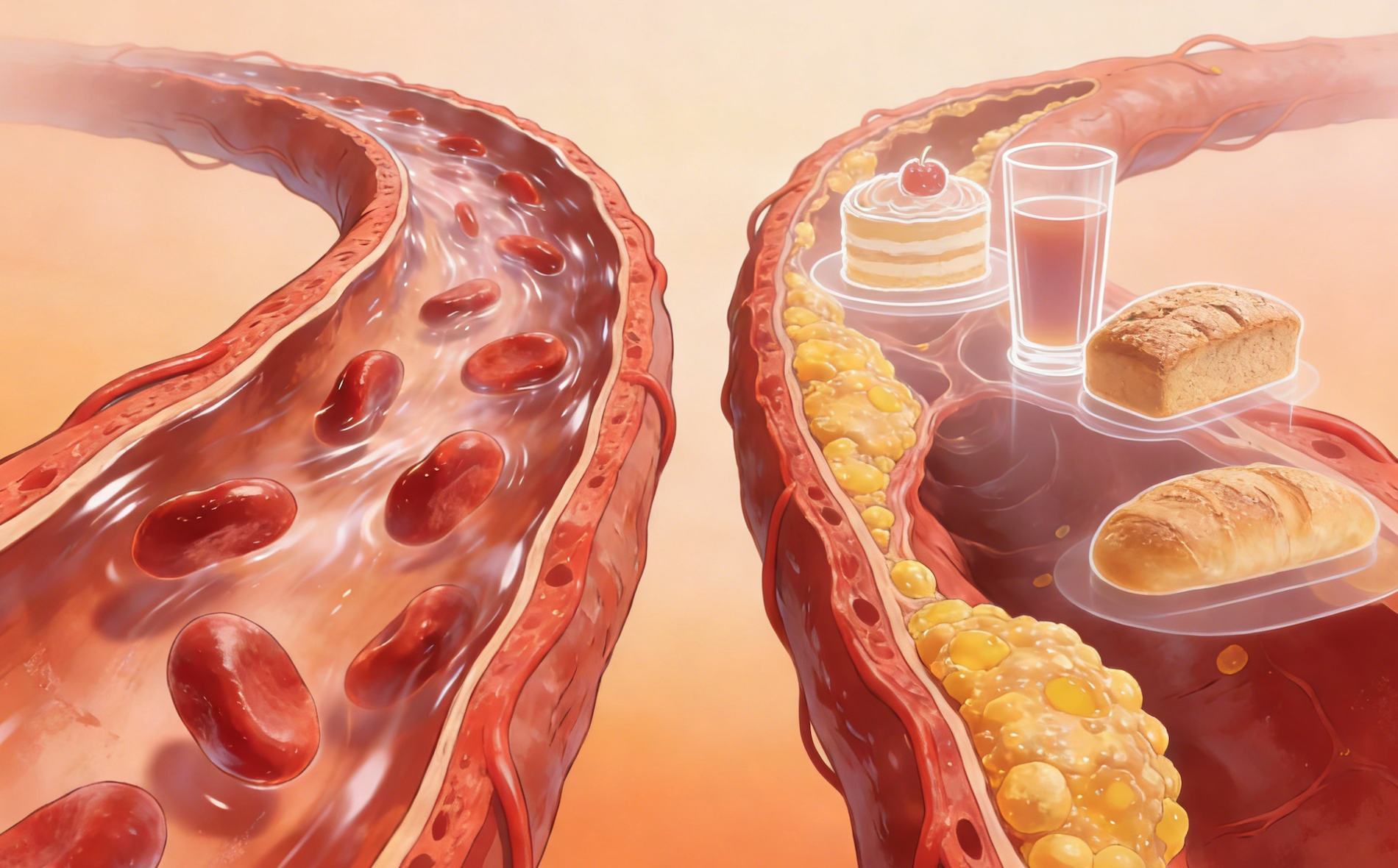
Why should patients with hyperlipidemia avoid sugary foods? An analysis of the impact of sugar on blood lipids.
This article explains in detail why patients with hyperlipidemia should avoid sugary foods, and how excessive sugar intake is converted into fat, leading to elevated blood lipids and subsequently cardiovascular diseases such as atherosclerosis. Understanding the dual impact of sugar on blood lipids is crucial for controlling and managing blood lipid levels.
2026-02-28
Why should patients with hyperlipidemia avoid high-cholesterol foods and lean meats?
This article reminds patients with hyperlipidemia to limit their intake of high-cholesterol foods (such as animal organs) and excessive lean meat, as both can exacerbate dyslipidemia and increase the risk of atherosclerosis. Scientific dietary control is a key measure for effectively regulating and managing blood lipids.
2026-02-28
The Effects of Coffee and Dieting on Blood Lipids: An Analysis of Scientific Weight Loss and Dietary Taboos
This article explores the potential for excessive coffee consumption to raise blood lipid levels, and the potential harm to the body from relying solely on dieting for weight loss. Understanding these dietary misconceptions can help in adopting more scientific methods to manage and regulate blood lipids, achieving healthy weight loss and blood lipid balance.
2026-03-01