
Guidelines for Methods and Examination Items for Determining Organ Damage in Hypertension
How to determine if hypertension has damaged vital organs?
Because the effects of hypertension on the human body are slow and gradual, many people may have had high blood pressure for a long time without feeling it. However, the damage caused by hypertension has already occurred unnoticed. Therefore, once hypertension is diagnosed, a comprehensive examination of major organs is necessary to understand whether there is damage and certain clinical conditions. This is crucial for assessing the cardiovascular risk in hypertensive patients.
(1) Whether there is cardiac damage can be determined through the following methods:
① History of myocardial infarction, angina pectoris, or heart failure;
② Electrocardiogram (ECG) can reveal myocardial ischemia, cardiac conduction block, and arrhythmias;
③ Echocardiography can reveal left ventricular hypertrophy, cardiac structure, and myocardial motility, and is superior to ECG in predicting cardiovascular risk;
④ Chest X-ray can reveal the cardiac outline, aortic tortuosity, or pulmonary circulation;
⑤ Spiral CT angiography can non-invasively assess the coronary arteries, and its reliability is second only to coronary angiography.
(2) Presence of cerebrovascular disease:
① History of stroke or transient ischemic attack (TIA);
② Simple cognitive tests can be performed to assess brain damage;
③ Transcranial Doppler ultrasound can directly assess cerebrovascular conditions;
④ If necessary, head CT or MRI can be performed to assess conditions such as cerebral infarction.
(3) Presence of kidney disease and damage: Urinalysis and renal vascular ultrasound can be performed. The following conditions indicate kidney damage. ① Quantitative urine protein: 30–300 g/24h;
② Microalbuminuria: Male, albumin/creatinine ≥ 22 mg/g (2.5 mg/mmol); Female, albumin/creatinine ≥ 31 mg/g (3.5 mg/mmol);
③ Mildly elevated creatinine: Male 115–133 μmol/L (1.3–1.5 mg/dl), Female 107–124 μmol/L (1.2–1.4 mg/dl). Serum creatinine > 177 μmol/L (2 mg/dl) suggests renal failure;
④ Uric acid level > 416 μmol/L (7 mg/dl).
(4) Check blood lipids, blood glucose, and blood potassium levels. If multiple blood lipid and blood glucose tests show values exceeding the following indicators, it suggests abnormalities in blood lipids and blood glucose:
① Total cholesterol (TC) ≥ 5.7 mmol/L (220 mg/dL);
② Low-density lipoprotein cholesterol (LDL-C) ≥ 3.4 mmol/L (130 mg/L);
③ High-density lipoprotein cholesterol (HDL-C) < 1.0 mmol/L (40 mg/dL);
④ Fasting blood glucose > 6.1 mmol/L (110 mg/dL) suggests impaired fasting glucose; ≥ 7.0 mmol/L (140 mg/dL) suggests diabetes;
⑤ Postprandial or oral glucose tolerance test 2-hour level 7.8–11.1 mmol/L suggests impaired glucose tolerance; ≥ 11.1 mmol/L suggests diabetes;
⑥ Blood potassium (K+): Normal range is 3.5–5.5 mmol/L. ⑦ C-reactive protein ≥10mg/L.
(5) The presence of atherosclerotic plaques or hardening in peripheral blood vessels is the most direct evidence for vascular arteriosclerosis or plaque formation. These examinations are simple and easy to perform, but are often overlooked.
① Vascular ultrasound: Carotid intima-media thickness ≥0.9mm or plaques in the arteries of the limbs.
② Fundus lesions: presence of hemorrhage, exudation, optic disc edema, etc.
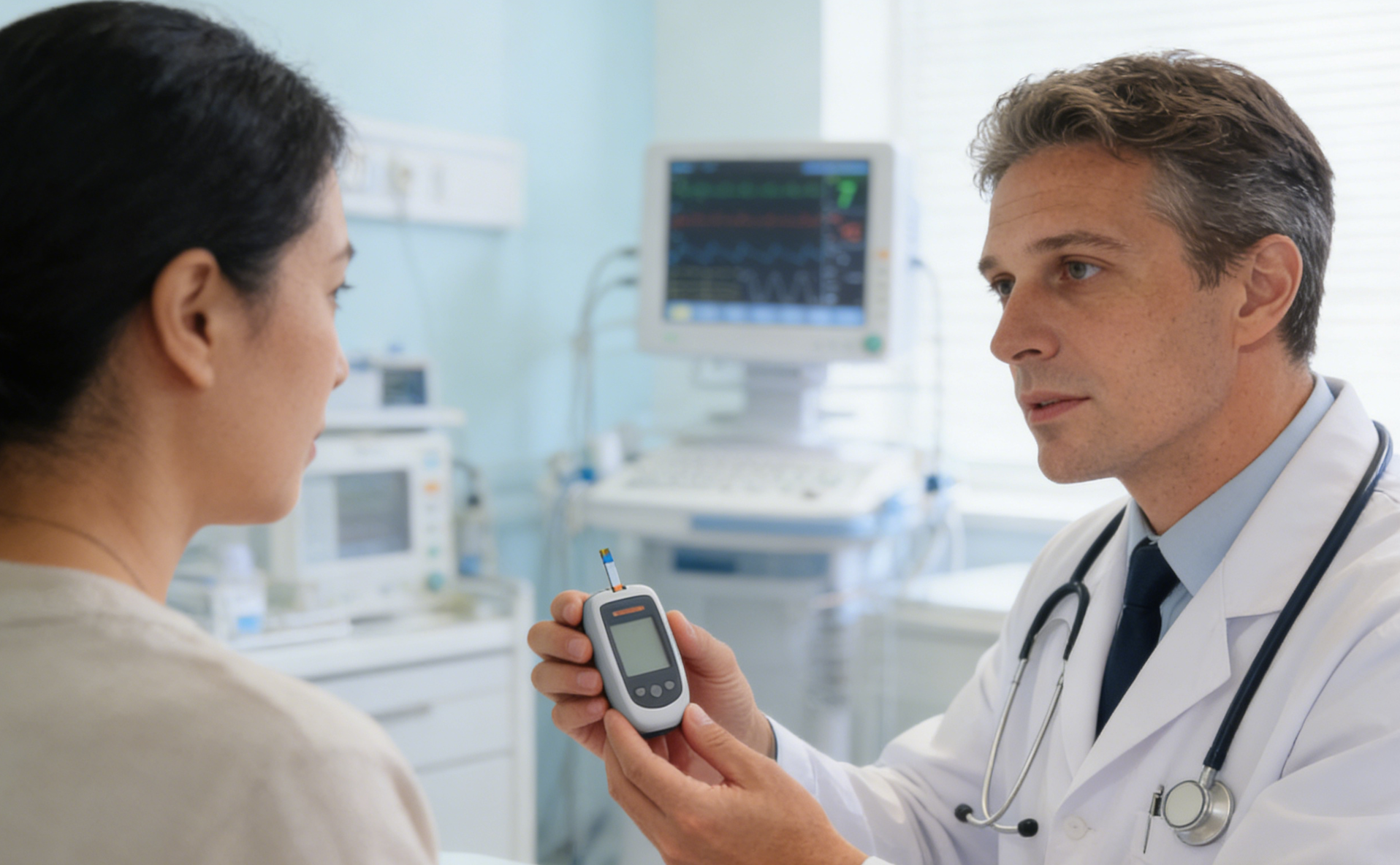
Detailed Explanation of Hyperglycemia: Symptoms, Diagnostic Criteria, and Potential Harms
This article details the diagnostic criteria, typical symptoms, and main dangers of hyperglycemia. Hyperglycemia is an important indicator of diabetes, and its long-term presence can lead to various complications. Understanding its manifestations and timely blood glucose monitoring are crucial steps in managing blood glucose levels and maintaining health.
2026-01-20
Detailed Explanation of Clinical Classification, Diagnosis, and Blood Glucose Control Standards for Hyperglycemia
This article provides a detailed analysis of the three clinical classifications of hyperglycemia (latent, chemical, and clinical) and their diagnostic methods, clarifying the satisfactory standards and management goals for blood glucose control. Understanding these classifications and standards will help in conducting more scientific blood glucose monitoring and achieving effective blood glucose management.
2026-01-20
Dietary Guidelines for Patients with Hyperglycemia: Key Foods to Eat and Principles to Avoid
This article provides scientific dietary guidance for patients with high blood sugar, detailing seven key dietary recommendations and seven dietary restrictions. By adjusting the dietary structure appropriately, such as controlling calorie intake and choosing low-glycemic foods, it is helpful to effectively control blood sugar levels and achieve long-term stable blood sugar management.
2026-01-20